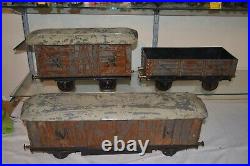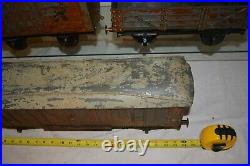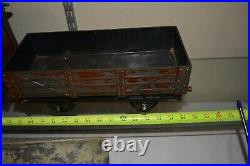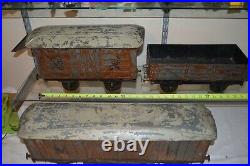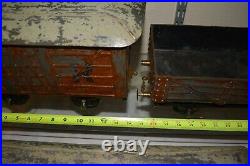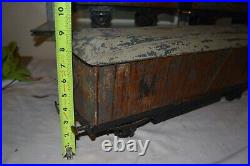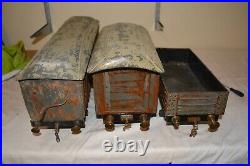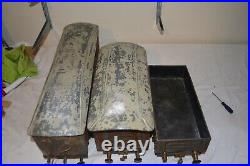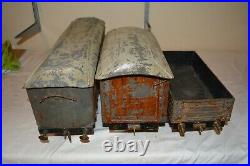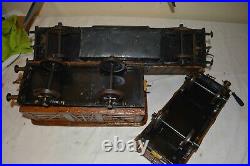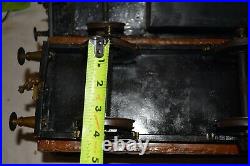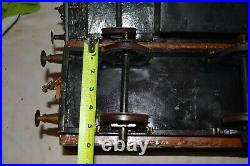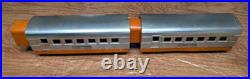
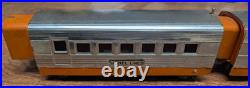
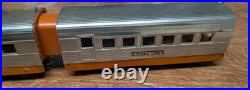
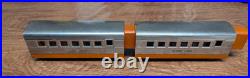
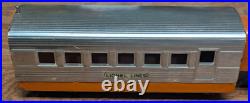
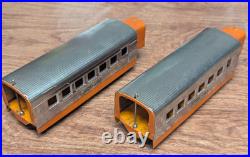
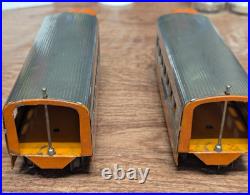
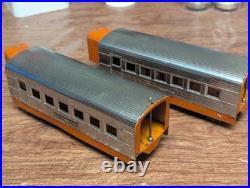
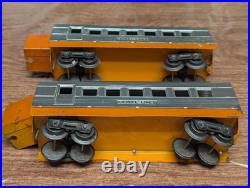
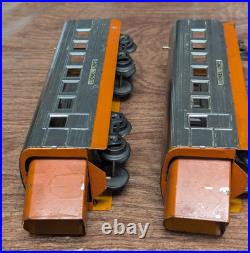
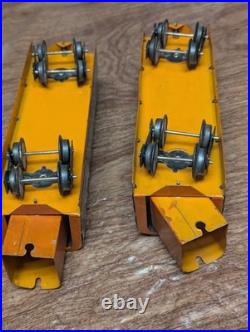
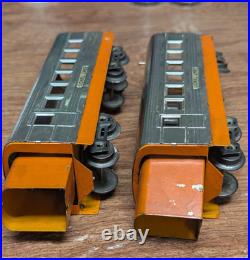
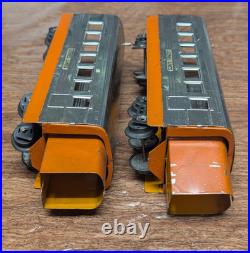
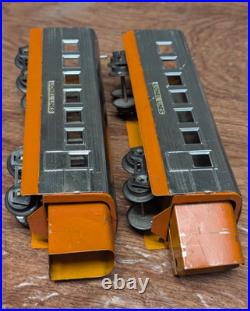
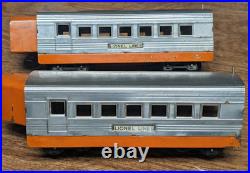
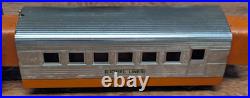
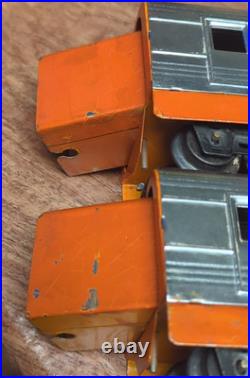
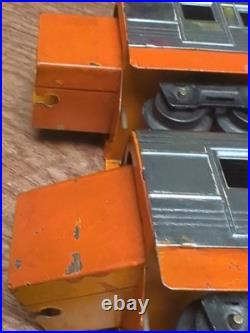
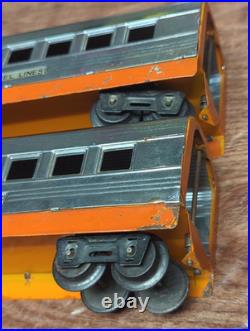
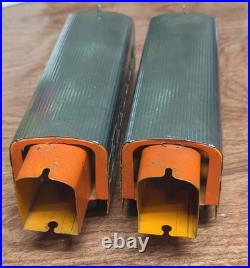
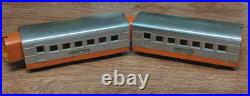
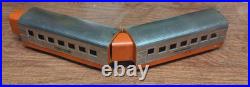

LOT of 2 Lionel Junior STREAMLINE Coach Passenger Cars MARKED “LIONEL” PRE-WAR manufactured around 1937. In excellent condition little sings of wea with slight loss of orange paint. I have taken shots of all sides and bottoms. The Lionel 1701 streamline passenger coach’s are prewar Lionel Junior train cars that often features a red or orange and silver color scheme. Details about the Lionel 1701 streamline passenger coach. Material: The bodies were made of stamped metal, often finished in a combination of chrome/silver and painted liveries, such as the orange color seen on the ends of these coach cars. Color Variation: The cars is typically part of a set featuring “Hiawatha Orange” (or red and silver/chrome) colors. Set Composition: It usually comes in a 3-car or 4-car set, including a 1700E power car (locomotive), one or more 1701 coaches, and a 1702 observation car. Onstruction: The cars have a stamped steel body and chassis with die-cast 4-wheel trucks. Features: They were designed for O gauge track systems and often featured operating interior lights. Condition and Availability: These are vintage, collectible items, and availability varies, often found through auctions or specialist dealers. Condition can range from significant play wear to high grade. These cares are in excellent condition for their age. History of Streamline Trains. The Union Pacific Railroad’s first streamlined diesel train in 1934, a lightweight aluminum “streamliner” that sparked a revolution in passenger rail, known for its futuristic look, high speeds (up to 110 mph), and groundbreaking publicity tour, leading to several similar UP M-series trains like the M-10001 and M-10003-6 for famous services like the “City of Portland” and “City of San Francisco” before being retired and scrapped for WWII. Key Features & Innovations. Lightweight & Streamlined: Built from aluminum alloy (Duralumin) for speed and efficiency, with an aerodynamic, Art Deco design. Diesel-Powered: Used distillate fuel, offering long ranges between refueling, a big advantage over steam. Articulated Design: Cars were permanently coupled, sharing trucks for smoother riding. M-10000: The original prototype, toured extensively as “The Streamliner, ” nicknamed “Little Zip, ” and later named the “City of Salina”. M-10001: A longer, 6-car diesel-electric version, known as the “Canary Bolt, ” set a record coast-to-coast run and became the “City of Portland”. M-10003-6: Four identical 2-car sets for services like the “City of San Francisco” and “City of Denver, ” eventually converted into booster units. These trains were symbols of future travel during the Great Depression, boosting morale. While revolutionary, they were ultimately replaced by more powerful locomotives and scrapped, with their aluminum recycled for the war effort. They inspired countless toy models, like those from Marx, preserving their iconic look.